
Upload. Organize. Invite. Watch your videos privately.
ClosedCast is a private video streaming platform that turns your videos into an organized private streaming archive. Upload the videos you want to keep, group them into collections, invite the people you choose, and watch on the web or Roku.
It is built for family memories, sermons, training, lessons, team video, events, member content, and other recordings that should be easy to find and easy to watch again.
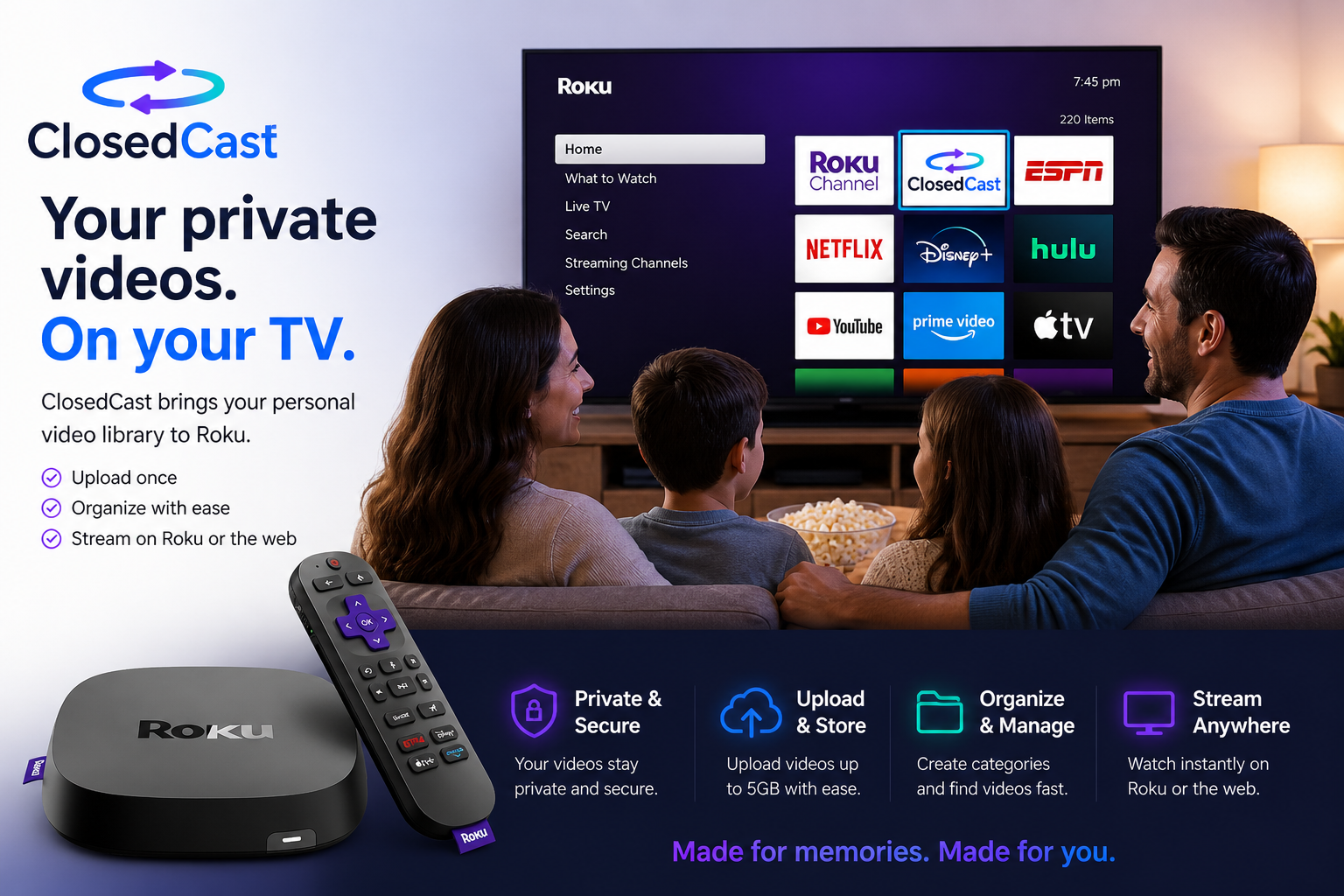
A private streaming home for videos that are not meant for the public internet.
ClosedCast combines private video hosting, organization, controlled sharing, and streaming in one place. The owner builds the library. Invited viewers get a simple way to watch. That is the difference between a folder full of files and a private video library people can actually use.
From video file to private streaming in four clear steps.
You manage the archive. ClosedCast handles the streaming experience.
Upload your videos
Add the recordings that matter: family videos, sermons, training, coaching, events, lessons, interviews, or private member content.
You bring the video.Organize your library
Put videos into clear collections so people can browse by topic, event, team, sermon series, training program, family milestone, or any structure you choose.
No more scattered folders.Invite the right people
Share a video or collection with specific people. Access is tied to the viewer, so you do not have to publish the video or depend on an open public link.
Private sharing with control.Watch on web or Roku
Approved viewers open ClosedCast, find the video they want, and press play. No large download, public feed, or maze of cloud folders is needed.
A familiar streaming experience.Owners stay in control. Viewers get simplicity.
Build and manage the library.
- Upload videos from your browser
- Create collections that make sense to your group
- Edit titles, descriptions, and organization
- Invite people to a video or collection
- Change or revoke access when needed
- Keep important video in one organized home
Open, choose, and watch.
- See videos shared with their account
- Browse clear collections instead of file folders
- Stream from a web browser
- Link Roku and watch on the television
- Return later and find the library again
- Watch without unrelated public recommendations
See what a private streaming archive feels like.
The ClosedCast Test Drive opens a read-only sample library so you can browse the product, explore categories, and see the viewing experience before creating an account.
No account is required for the Test Drive.

Private video needs a different kind of home.
Public video sites are built to help content reach more people. Cloud drives are built to store files. ClosedCast is built to help the right people find and watch a private video collection over time.
| What you need | Cloud folder | Public video platform | ClosedCast |
|---|---|---|---|
| Organized video library | File-first | Channel or feed-first | Archive-first |
| Private access | Link or account controls | Depends on platform settings | Invite the people you choose |
| TV viewing | Often file-based | Built for public content | Roku + web |
| Viewer experience | Browse folders | Public feeds and discovery | Open, choose, play |
| Best fit | Storing files | Reaching an audience | Preserving and privately streaming video |
One product. Many kinds of private video.
If the video matters to a specific group more than it matters to the public internet, it is a strong fit.
Families
Keep birthdays, holidays, travel, old recordings, and family history in a private family video archive.
Family video archives →Churches & ministries
Organize sermons, classes, events, training, and ministry history in a private church video archive.
Church video archives →Coaches & teams
Give athletes, clients, students, or members a private place for lessons, reviews, training, and game video.
Coaching video libraries →Organizations
Preserve training, meetings, events, announcements, and institutional knowledge in an organized video library.
Private streaming archives →You do not have to build a video server.
ClosedCast handles the video-processing and streaming work behind the scenes. You focus on the library: what belongs in it, how it is organized, and who should see it.
This makes ClosedCast a practical alternative for people who want private video streaming without setting up their own media server, transcoding system, delivery network, or custom Roku app.
Learn about the media-server alternative →Questions people ask before using ClosedCast
What exactly is ClosedCast?
ClosedCast is a private video streaming platform for building an organized video archive. You upload videos, organize them into collections, choose who gets access, and stream them on the web or Roku.
Is ClosedCast cloud storage?
No. Cloud storage is mainly designed around files and folders. ClosedCast is designed around a watchable video library, controlled access, and streaming playback.
Do viewers need a public link?
ClosedCast is built around invited access. Owners can share a video or collection with specific people instead of posting it to a public feed.
Can I watch my own videos on Roku?
Yes. ClosedCast includes Roku viewing so approved viewers can watch a private library on the television as well as in a web browser.
Who is ClosedCast for?
ClosedCast is designed for families, churches, coaches, teams, educators, membership groups, nonprofits, and organizations with video that should stay organized and private.
Do I need technical skills or my own media server?
No. ClosedCast is designed as a hosted service. You manage your videos and viewers while the platform handles the streaming infrastructure.
Can I try ClosedCast before signing up?
Yes. The ClosedCast Test Drive lets you explore a read-only sample library without creating an account.
How is ClosedCast different from YouTube?
YouTube is built for public discovery and reach. ClosedCast is built for private archives, controlled access, and repeat viewing by the people you choose.
Build a private video library people can actually find and watch.
Start with the videos you already have. Organize them once. Invite the people who matter. Then make the archive part of everyday life again.


ClosedCast is an emerging leader in private video streaming , helping families, churches, teams, and organizations securely archive, share, and watch private videos online and on TV.